Growing your own ingredients for spellcraft.
This post is an excerpt from our coming Spring 2021 Newsletter, out soon.
A very quick overview of 15 common herbs and flowers that are easy to grow. You can use these in your cooking and magic, at the end you’ll find a sample planting plan for a kitchen witch garden.
Table of Contents:
Lavender
Marigold
Basil
Thyme
Rosemary
Sage
Chives
Parsley
Marjoram/Oregano
Violets
Mint
Lemon balm
Nasturtium
Rose
Winter savoury
Planting plan
Lavender
Growing:
English lavender (Lavandula angustifolia) is the one to use if you will be using it in the kitchen as well. It grows best in well drained, sandy/loam soil and prefers full sun. Frost and cold tolerant but will rot with too much water/poor drainage. A perennial evergreen growing 25-80cm wide and 25-120cm tall.
Magical properties:
Love, Protection, Sleep, Chastity, Longevity, Purification, Happiness, Peace.
Culinary use:
Lavender has a wonderfully distinct flavour when used in cooking and is at home in desserts, drinks and baked goods. I’m particularly fond of the lingering aftertaste it gives when baked in a summer bread.
Marigold
Growing:
Calendular officinalis grows in most soils and self seeds readily. Prefers full sun to part shade. An annual growing up to 60cm wide and 50cm tall, however often smaller than that.
Magical properties:
Protection, prophetic dreams, legal matters.
Culinary use:
The whole plant is edible, the leaves can be added to salad and used as a garnish. The flower heads are the most common part used in food and are a medicine. The petals can be used as a garnish, added to salad or rice, baked into a bread, etc.
Basil
Growing:
Ocimum species contain a huge range of basil varieties and hence flavours. They all grow best in well drained, compost rich soils that regularly have nutrition added, they will grow in full sun to part shade depending on climate. Basil can be either annuals or short lived perennials that can grow between 20-100cm wide and 20-100cm tall depending on variety.
Magical properties:
Business, fortune, luck, love, prosperity, exorcism, courage.
Culinary use:
A pizza and pesto favourite, there are so many different basil varieties that you can find one to suit your dish. They are particularly used in savoury dishes, meat dishes and in salads where, depending on the basil used, they can add a sweet flavour or pack a spicy punch.
Thyme
Growing:
Thymus species are robust, slow growing herbs that bees adore. They prefer well drained soil that isn’t too rich and too much water will rot them. They like all day sun but will tolerate part shade or half day sun. Thyme is a perennial that, depending on species and cultivar, will grow 20-40cm wide and 5-40cm tall.
Magical properties:
Health, Healing, Sleep, Psychic Powers, Love, Purification, Courage.
Culinary use:
When using thyme in cooking make sure it has a scent, no scent means no flavour. Thyme is well suited to savoury foods and is particularly good with meat and eggs. It also goes well with roasted or grilled vegetables and baked into bread. Thyme is particularly good at adding depth of flavour to savoury foods.
Rosemary
Growing:
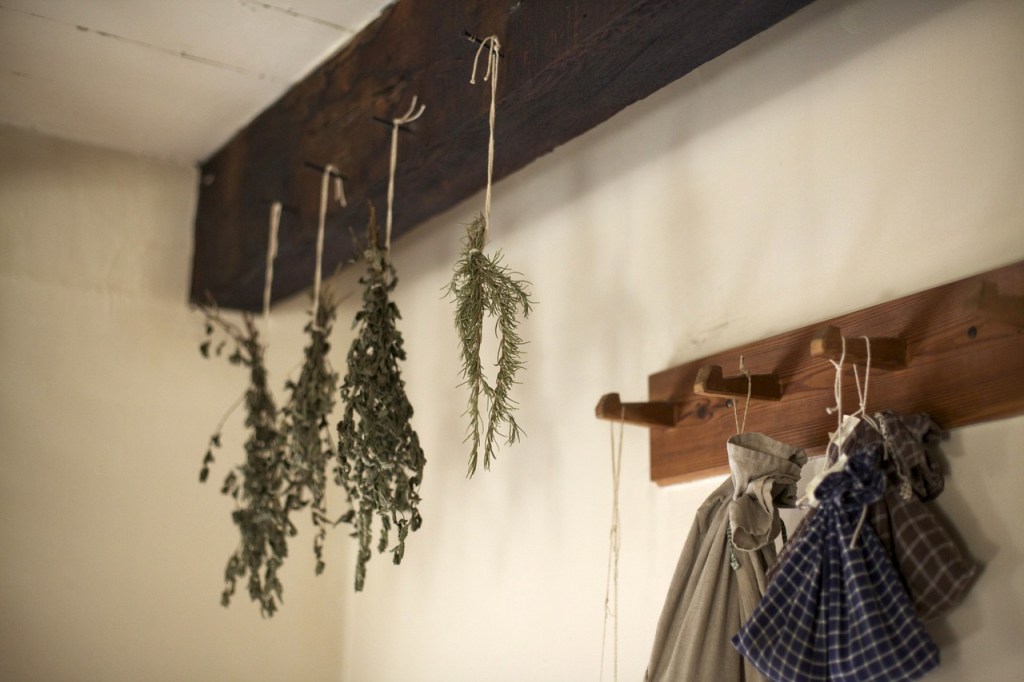
Rosmarinus officinalis is a woody shrub that loves well drained, slightly alkaline soils. It loves full sun and needs at least 5-6 hours a day to do well. There are both upright, prostrate and dwarf forms available and the flowers make good forage for over winter. Depending on the variety rosemary grows up to 100cm wide and 150cm tall.
Magical properties:
Protection, Lust, Exorcism, Purification and Healing.
Culinary use:
Make sure if you purchasing rosemary to get one you like the taste of, try a leaf first. Rosemary is the quintessential Mediterranean plant and flavour and goes well in those dishes. It is also fantastic in most other savoury foods and is a robust pairing for meat. It is also at home in dressings and marinades.
Sage
Growing:
Salvia officinalis is a woody herb that will grow in most soils, it will thrive however in well drained soil that is slightly alkaline. Sage likes to grow in full sun, high humidity/very wet weather will kill it as will very hot and very cold weather. This is a short lived perennial that enjoys a trim but doesn’t like being cut back hard, it grows up to 50cm wide and 70cm tall.
Magical properties:
Immortality, Longevity, Wisdom, Protection, Wishes.
Culinary use:
Sage has a strong aroma and robust flavour, it goes well with other robust flavours and is at home in savoury dishes and is frequently used alongside pork.
Chives
Growing:
Allium schoenoprasum likes rich well drained soil and doesn’t like to be dry. It is frost tolerant but will die back over winter in cold climates regrowing from its bulbs when spring arrives. Chives like full sun to part shade and like to be cut back (used in the kitchen!) often to grow lush. They will form clumps and grow up to 20cm wide and 40cm tall.
Magical properties:
Protection, warding, love.
Culinary use:
The leaves/stems have a mild and sweet onion scent and flavour that fits with savoury dishes very well and are great in eggs. The purple flowers are also edible with a slight onion flavour and make a great garnish, they also look fantastic in a jug of water on a summer table. Garlic chives are also worth a look for an onion/garlic flavour.
Parsley
Growing:
Petroselinum crispumis prefers a well drained, rich soil and will do well in the garden or in pots. There are flat and curly leaf parsley and both prefer full sun to part shade. They are a short lived perennial that readily self seeds, they usually develop root and stem rot quicker in warm climates. They usually grow up to 20cm wide but can grow well over a meter in height. For bushy growth cut regularly.
Magical properties:
Death, Fertility, Love, Lust, Protection, Purification, Spirit Communication.
Culinary use:
Parsley has a distinct flavour that isn’t too powerful so mixes will with other flavours. It is usually used in savoury foods and makes a lovely tea and garnish.
Marjoram/Oregano
Growing:
Origanum majorana/Origanum vulare are both highly scented herbs that prefer well drained, rich, slightly alkaline soil and regular water. They both enjoy full sun to part shade and quickly form a lovely, scented ground cover. Oregano is much more hardy than marjoram and has larger leaves that are also hairy. They are both perennials that will grow up to 50cm wide and 40cm tall.
Magical properties:
Health, joy, love, luck, protection, psychic dreams, happiness, money, purification.
Culinary use:
Both herbs have a robust flavour that adds to savoury dishes, baked goods and are a wonderful addition to pizza. They go well with other herbs such as thyme, rosemary and sage.
Violets
Growing:
Viola species do well in almost any soil, especially where they get winter sun and summer shade. They will grow anywhere from full sun through to full shade however. This perennial plant grows up to 30cm wide and 20cm tall making it a good ground cover.
Magical properties:
Peace, protection, healing, luck.
Culinary use:
Violets have a lovely sweet scent and flavour that goes well with sweet foods but are also a lovely garnish. They can be sugared to help preserve them and then added as a sweet topper to cakes later. Violets are also good at holding onto their scent when dried, so they do well as a kitchen staple, not just a fresh addition.
Mint
Growing:
Mentha species are a family of well loved, hard to kill, aromatic plants that will grow almost anywhere but they prefer rich soil that is slightly acidic that is almost constantly wet. It will grow anywhere from full sun to full shade but the more sun it get the more vigorous it will be. Being a creeping perennial, mint doesn’t usually grow taller than 30-40cm but can take over the whole garden if allowed to so it is best to restrict its growth to pots or a bed of its own that is edged by dug in bricks/rocks. Once it invades an area it is difficult to properly remove.
Magical properties:
Exorcism, Healing, Lust, Money, Prosperity, Protection, Travel.
Culinary use:
Given the vast amount of different mints and their flavours you can find a mint to suit your desires. They are often used in drinks and teas as well as desserts but the more robust ones play well in savoury dishes as well.
Lemon balm
Growing:
Melissa officinalis is a lively plant loved by bees that prefers well drained, rich soils that are not prone to drying out. It will grow in full sun through to part shade but need protection from hot summer sun so does well under deciduous trees. This perennial usually grows up to 60cm tall and 60cm wide but can become invasive. It enjoys being trimmed though.
Magical properties:
Love, success, healing.
Culinary use:
The leaves are very fragrant and are tasty in salads desserts, drinks and stuffings. The leaves are a bit furry but won’t hurt you. A jug of water with a handful of the leaves is very refreshing in summer.
Nasturtium
Growing:
Tropaeolum majus are very vigorous trailing/climbing plants that tolerate most soil types. They prefer a full sun/ part shade position and the plants will die in very hot or very cold weather. Nasturtium is a happy annual that will readily self seed and germinate when it suits them. On average they grow up to 30cm tall and 50-70cm wide however I have seen some grow to cover more than 3-4m depending on variety.
Magical properties:
Happiness, love, purification, protection.
Culinary use:
All of the plant is edible and has a spicy, peppery flavour. The flowers are less peppery and have a sweet flavour too, while the leaves are quite spicy and savoury. Both parts lend themselves well to salads and garnishes as well as savoury dishes that have robust flavour.
Rose
Growing:
Rosa species are a long cultivated plant for its fragrance and its edible/medicinal flowers and hips. They like well drained, slightly acidic soil and do well with added compost/manure. They need full sun for 6 hours a day to flower but will grow in full sun/part shade. There is such a huge variety to chose from, ranging from 30 to 300cm tall and the same wide but if you will be using the flowers for food/medicine you need to pick one known for its fragrance as that is what will give the flavour and medicinal qualities.
Magical properties:
Love, happiness, peace.
Culinary use:
Given the sweet scent of the flowers they are well suited to sweet dishes and preserves. They are also a lovely addition to a cheese board or salad. The rose hips (the fruit after flowering) are very high in vitamin C and can be used in preserves or the seeds removed and the fruit dried to add to sweet and savoury dishes or herbal teas for its flavour and medicinal properties.
Winter savoury
Growing:
Satureja montana is another herb well loved by bees and other beneficial insects and has the added benefit of repelling other insects. It prefers well drained sandy loam soil and will suffer if it is too wet, hot, cold or humid. It grows best in a full sun position and won’t recover if pruned hard or fertilised too often. This is a small woody perennial that will grow up to 50cm wide and 30cm tall.
Magical properties:
Sensuality, sexuality, passion, lust, love. This can apply to both winter but more so to summer savory. If you can only have one and want to also use it in the kitchen then winter savory covers more of your needs.
Culinary use:
Winter savoury has tiny, dark green, spicy leaves. It is fantastic in casseroles, pies, and goes surprisingly well with beans and salads. Like thyme it is good at adding a depth of flavour to foods.
Planting plan
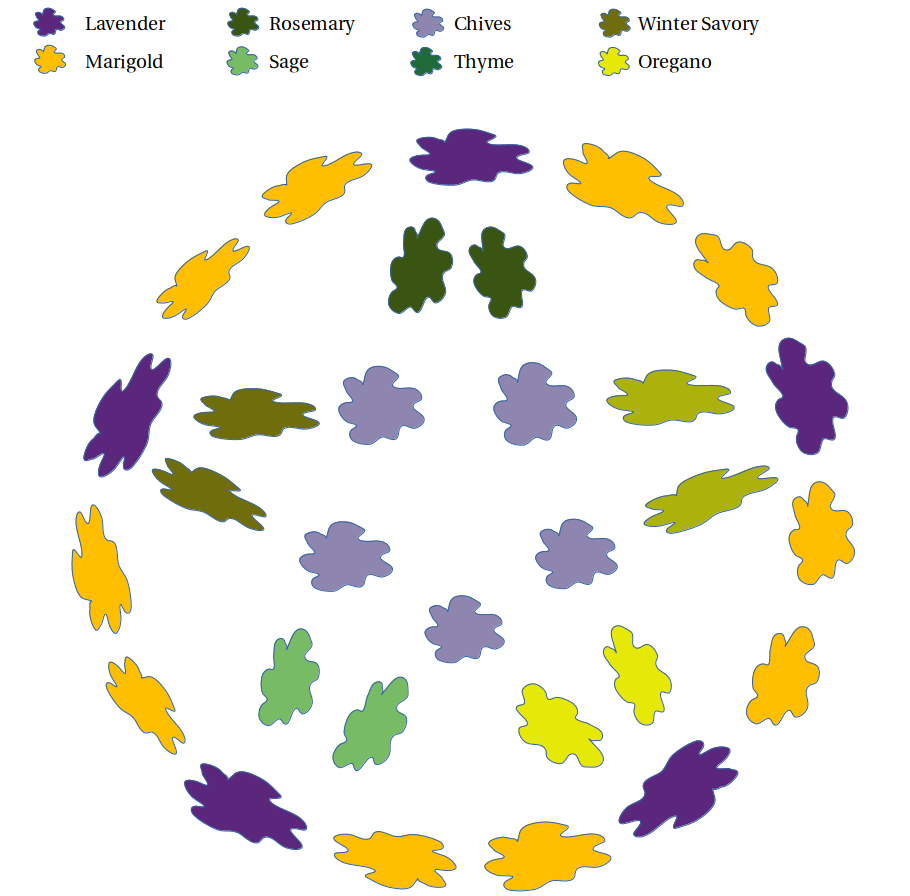
An idea to get you started, mix and match what works for you or do something completely different.
Having a play with aesthetic this planting takes the form of a pentagram. The minimum space this would work in given recommend plant spacing is 2m by 2m (this is the size the below planting plan is based on) though you could make it as small or as large as you like. The smaller the planted area the more the plants size and shape will need to be controlled to stop the lines from blurring into each other.
Recommended plant spacing is 30cm.
Kind regards and blessed be,
The Holly and The Ivy

 Southern Light Newsletter